
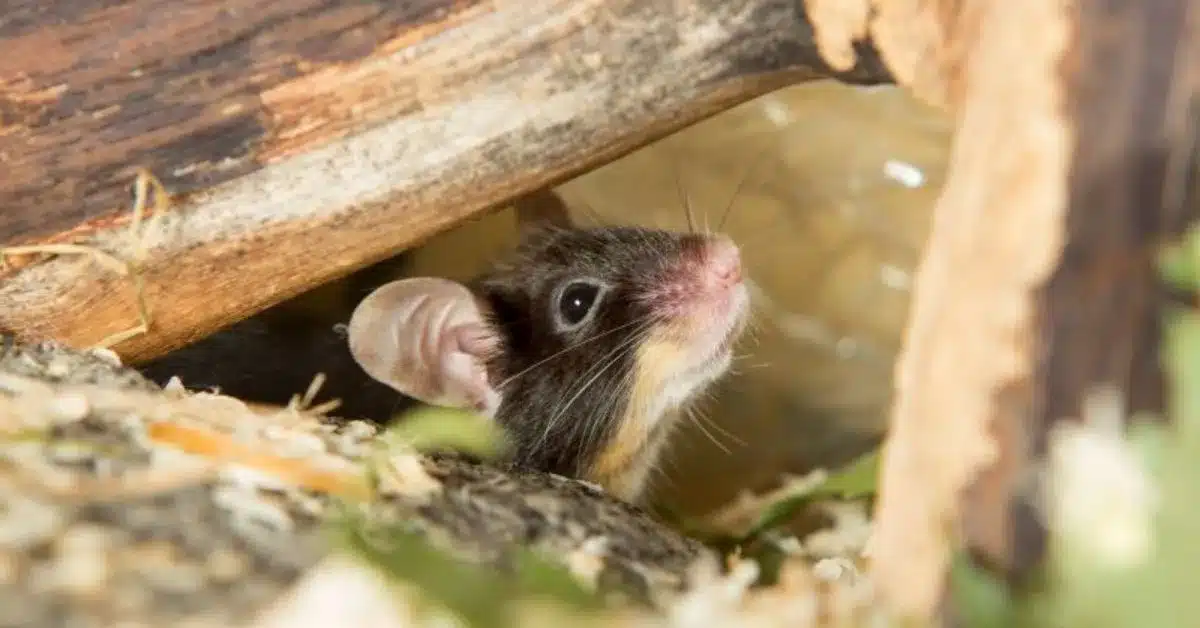
Mice are highly social animals who thrive in groups. In fact, mice can become depressed and live a shorter lifespan if forced to live alone.
But male mice are also highly territorial, and they very often fight when kept with other males. Keeping a male mouse with females isn’t a good choice either unless you’re a professional and ethical mouse breeder.
So it’s no surprise that the topic of how to house a male mouse has become a point of contention in the mouse community. Some mouse owners think it’s just fine to keep a male mouse alone, while others believe it’s cruel and unethical to do so.
So should you keep a male mouse alone? If not, what can you do instead? We’ll provide our opinion, based on thorough research and firsthand experience, below.
Learn more: Mouse Cage Size: What Size Cage Do Mice Need?
Why Do People Keep Male Mice Alone?
The reason many people keep a single male mouse as a pet has to do with the natural instincts of male mice.
In the wild, an adult male mouse usually lives with a group of females and their babies. A male mouse never shares territory with another adult male mouse. So it makes sense that keeping two or more male mice together leads to a lot of stress and often serious injuries or death.
In captivity, you don’t want to keep a male mouse with a group of females. If you do, you’ll very quickly end up with more mice than you know what to do with! And breeding mice should only be done very carefully, by a professional and ethical breeder.
Because of these barriers, many mouse owners choose to keep their male mice alone. Some owners report that their male mouse is happy on his own, while other mouse owners are strongly against this.
Most mouse owners and experts agree that keeping a male mouse alone isn’t ideal. Generally, there are three solutions to this problem:
- Keeping unneutered male mice together (most mouse owners advise against this)
- Neutering male mice to live with females or other neutered males
- Housing male mice with female soft-fur rats
We’ll discuss each of these options below.
Keeping Male Mice Together vs. Solitary
This is a complicated topic, and there are many different opinions and viewpoints on whether it’s OK to keep male mice together or if it’s better to keep male mice alone.
Our conclusion
We’ll explain our sources and research below, but if you just want our opinion on the topic, here it is.
If you can’t neuter a male mouse to keep him with females, you can try keeping him with another male mouse from his litter. However, it isn’t necessary if you feel the risks outweigh the potential benefits. Based on our research, the risks do outweigh the benefits. However, there are mouse owners who disagree with this.
Housing males together needs to be done very carefully, and you must watch out for signs of aggression. Housing male mice from the same litter can improve the chances of them getting along, but not always. You generally want to avoid introducing two males from different litters.
If you choose to or have to keep your male mouse alone, you’ll absolutely need to pay your mouse extra attention and provide extra enrichment for him to avoid boredom. Try to build a trusting, close relationship with your male mouse so he sees you as a companion.
Scientific research
There have been several laboratory research papers written about the welfare of male lab mice when kept alone.
This research, unfortunately, cannot be conclusive about whether you should keep male pet mice together or alone because the conditions of male lab mice are very different from those of pet male mice. We’ll discuss this more in detail in the next section.
Here is a summary of the important research conclusions about male lab mice living alone vs. socially.
1. Male mice prefer the company of other males to living alone
While you’ll find plenty of articles and sources stating that male mice simply aren’t social animals, this isn’t true.
Get the Free Mouse Owner's Toolkit
Printable care tools made for mouse owners. Chore chart, intros checklist, weight tracker, and more delivered to your inbox.
Research has shown that when given the chance, a male lab mouse will choose to live in close proximity to another male mouse as opposed to living alone.
2. Individually housed male mice can suffer health problems
The study linked above also shows that individually housing male lab mice can lead to increased stress hormones and other negative health consequences.
3. Different mouse strains do better with other males
Finally, research on male laboratory mice shows that different strains or lineages of mice have different reactions to being housed together.
Male lab mice from some lineages are more territorial than mice from other strains.
Why the research isn’t the final word
Now let’s look at why the scientific research mentioned above doesn’t give us a clear answer about housing pet male mice together vs. alone.
1. Lab mice are bred for non-territorial traits
As mentioned, research has shown that some strains of lab mice are more territorial than others. However, these laboratory mice weren’t compared to the average pet mouse or the common house mouse.
This is important because laboratory mice come from a very small pool of ancestors, and they have been selectively bred to eliminate aggressive or territorial traits.
So comparing one strain of lab mouse to another strain is not an effective method of predicting the genetic behavior of all or most pet mice.
Laboratory mice come from a very small pool of ancestors, and they have been selectively bred to eliminate aggressive or territorial traits.
2. Lab mice don’t have as much enrichment
Secondly, laboratory mice have very limited enrichment in their enclosures. This means that a pet mouse could be significantly happier living alone than a lab mouse because they have more enrichment to reduce stress.
A lab mouse’s source of enrichment is primarily other mice, so taking this away will of course lead to stress.
3. Lab mice don’t have as much human interaction
Similar to the point above, pet mice have much more interaction with humans, at least ideally. A lab mouse doesn’t have a chance to form a meaningful bond with a human, which takes work every day.
Many mouse owners (us included) believe that interacting more with their male mice can reduce or eliminate the stress they display from being housed alone.
4. Lab mice don’t have the option of being neutered
Scientists mainly perform experimental research on unaltered male mice. Neutering a male mouse can affect the outcomes of that research, so it’s rare that this would happen.
Pet mice, on the other hand, have the option of being neutered so that they can safely be kept with female mice.
5. Lab mice don’t receive proper care overall
The key point is that scientists and staff working with mice in a lab have different end goals from the common mouse owner or animal welfare advocate. They may be interested in the animal’s welfare, but only so far as it affects the science.
Laboratory mice are kept in small enclosures with little enrichment and a bland, boring diet that never changes. They also don’t have the opportunity to build a trusting relationship with a human.
This means that a male laboratory mouse’s only real enrichment is in interacting with other male mice. They may be more likely to get along because they don’t have anything else to do or any real territory to fight over.
In short, laboratory mice and pet mice with the proper care will not show all of the same types of behaviors or reactions to the same situations. It’s impossible to completely base pet mouse care on studies on laboratory mice.
6. Ultimately inconclusive
The research journal Animals basically sums up the problems with housing male mice:
Wild mice live in territories inhabited by one adult male, several females, and their offspring. This cannot be replicated in the laboratory, so male mice are usually housed in single-sex groups or individually.
However, there can be serious animal welfare problems associated with both these approaches, such as lack of social contact when housed individually or aggression between males when kept in groups.
Animals
The research paper’s conclusion is that they can’t provide any general recommendations and that the decision needs to be made on a case-by-case basis.
General mouse owner opinion
The general consensus amongst mouse owners and exotic vets is that male mice can be kept alone, but they won’t be as content as they would in a social housing environment.
However, it’s still common practice to keep a lone male mouse as a pet because it’s hard to avoid the issues with keeping male mice together or with females.
Learn more: What’s the Best Bedding for Mice?
Keeping Male Mice from the Same Litter Together
One way to minimize fighting between male mice is to keep them together from birth. This doesn’t always ensure that male mice won’t become territorial and fight, but it does reduce the chances.
If you adopt two male mice from the same litter, you’ll need to keep an eye out for territorial behaviors and provide them with extra space in their enclosure.
Ultimately, most mouse owners would agree that even if they’re from the same litter, keeping unaltered male mice together has more risks than benefits.
Keeping Neutered Male Mice Together
Neutering male mice can help somewhat with territorial aggression in mice. This is because it reduces the hormone that causes males to be more territorial than females.
So if you have two male mice that aren’t getting along, neutering both of them is one possible solution. You’ll need to separate the male mice before and immediately after the surgeries until they’re both healed and their hormones have leveled out.
Neutering Male Mice to Live with Females
If you’re going to neuter a male mouse, you may be able to keep him with another neutered male. But another option is keeping a neutered male mouse with a pair or small group of females. The male mouse won’t be able to breed with the females, and he’ll get all of the benefits of social living.
Neutering a male mouse also has the added benefit of cutting down on the smell that male mice tend to have when they’re unaltered.
The difficult part of this option is finding an exotic pet vet who offers neutering to male mice. An experienced, expert veterinarian can do this procedure safely, with very minimal trauma to your pet.
This is considered an ideal solution for housing male mice for most mouse owners and vets.
However, there are situations where neutering isn’t possible, such as if there’s not an exotic vet in your area or if the mouse is older.
Housing a Male Mouse with Female Soft-Fur Rats
Finally, you can keep a male mouse with female soft-fur rats, which are similar to fancy mice but cannot interbreed with a male mouse. Soft-fur rats are relatively new to the pet trade, so you won’t often find them in rescues or from ethical breeders.
Male Mice Are an Underrated Pet
Male mice get a bad rap overall, but most people who have had male mice would agree that they are sweet and loving companions. Male mice tend to be friendlier and more open to human interaction than female mice. This may be because female mice depend upon each other for socialization and enrichment more than males do.
Don’t let the challenges of keeping male mice discourage you from adopting one or rescuing one. The perks of bonding with a male mouse often far outweigh the complications and obstacles of figuring out how to house them.
Sources:
https://www.ncbi.nlm.nih.gov/pmc/articles/PMC5742782/
https://www.tandfonline.com/doi/abs/10.1207/S15327604JAWS0402_1
https://www.tandfonline.com/doi/abs/10.1080/11250008109439329?src=recsys



0 Comments