

When it comes to food for gerbils, there are far fewer options available than foods for cats or dogs. But it can still be a daunting task to figure out what we should feed our gerbils.
To make things more complicated, some of the best-selling commercial gerbil foods aren’t actually right for our beloved gerbs.
If you have experience with any of these gerbil foods, please let us know what you think of it in the comments! Your input helps us to maintain the most up-to-date information about what’s best for our pets.
Before looking at specific gerbil foods, it’s essential to understand what you’re looking for in an excellent gerbil food. You can find our complete dietary guidelines for gerbils here to learn more about what we look for in gerbil nutrition.
Note: This article is specifically referring to Mongolian gerbils. Fat-tailed gerbils can essentially eat a similar diet, but their specific needs may differ.
What Kind of Food Do Gerbils Need?

Most gerbil owners, experts, and hobbyists agree that a balanced gerbil diet should include three components:
- Lab blocks or pellets
- Seed mix
- Fresh vegetables and fruits
There are some who disagree with providing lab blocks, citing that they contain low-quality ingredients and unnecessary additions (which is true).
But we find that pellets are a suitable addition to a gerbil’s diet, and so do most veterinary experts. Pelleted food with the right nutritional balance ensures that your gerbils are receiving a wide range of nutrients with each bite.
Learn more: What Do Gerbils Eat? Complete Gerbil Nutritional Guidelines
Almost all gerbils will pick out the parts of a seed mix they like and leave the parts they don’t like, which means they’re not getting all of the nutrients listed on the packaging. This occurs even if you provide the correct amount of food each day. Eventually, this can lead to weight loss, stress, and ill health.
Some will cite the fact that “wild gerbils don’t need lab blocks, so they don’t need them in captivity.” But the fact is that wild gerbils only live about a year at most.
They either die to predation, the harsh environment, or malnutrition. We get to treat our gerbils to a safe environment and a complete diet, which means they typically live about twice as long.
Lab blocks are also wonderful for helping keep your gerbil’s teeth and claws trim and provide additional chewing enrichment.
Best Commercial Gerbil Food

Now we’ll look at the best commercially available food for gerbils, including lab blocks and seed mixes.
Best lab blocks and pellets for gerbils
A good lab block for gerbils has a high level of protein and a modest amount of fat.
Although lab blocks do contain filler ingredients, these are necessary to hold the block together and ensure that your gerbils get a wide variety of nutrients in every bite. These fillers are safe for gerbils to consume, even if they do not add nutritional value.
Here are the lab blocks that we, and many other gerbils owners and experts, recommend.
1. Oxbow Essentials Adult Rat
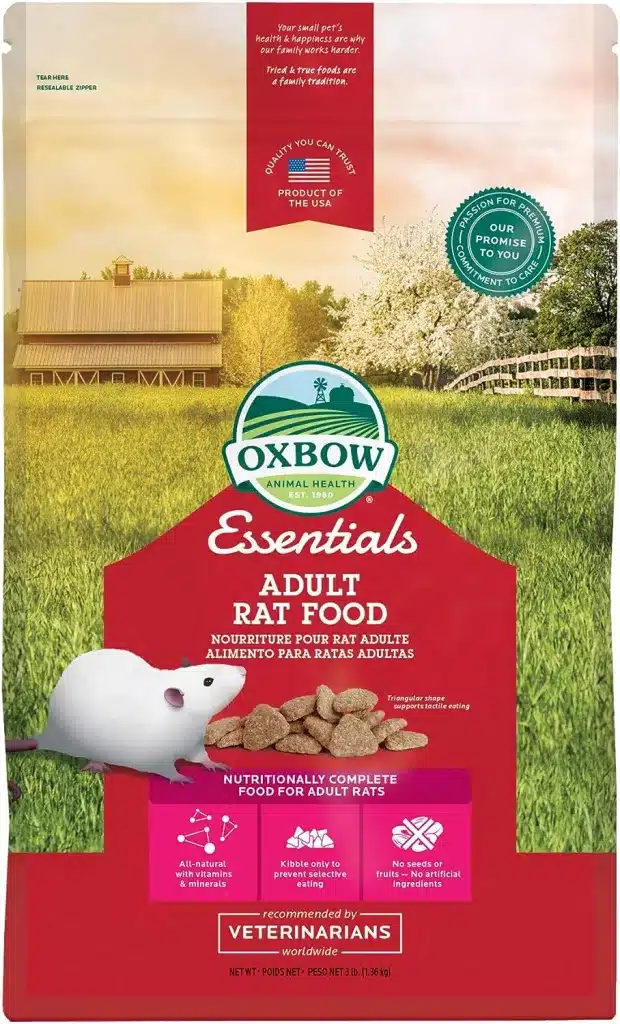
Protein: 23% | Fat: 4% | Fiber: 5%
Oxbow Essential Rat food is intended for rats, but it has the nutritional values suitable for gerbils, too. Many gerbils also prefer the taste and size of these pellets over larger lab blocks.
It’s important to note that these are very different from Oxbow’s gerbil and hamster pellets, which aren’t suitable for either gerbils or hamsters. This is because the gerbil and hamster pellets are hay-based, meaning gerbils and hamsters can’t properly digest the food and won’t get a full nutritional profile from it. So even if a hay-based pellet contains 15% protein, your gerbils may only get 5% protein or less from the hay-based pellet.
These pellets are wheat and oat-based, which makes them easier for gerbils to digest, so they’ll get closer to the nutritional values listed on the package.
2. ENVIGO-Harlan Teklad Global Rat Food Pellets (2014 Formula)

Protein: 14.3% | Fat: 4.0% | Fiber: Unknown
The Teklad Global Rodent Diet, 2014 formulation by ENVIGO is highly regarded as a nutritional lab block for gerbils. It has lower protein than other lab blocks, which can help ensure your gerbil doesn’t consume too much protein on a daily basis.
Teklad lab blocks are formulated to high standards to ensure that the food doesn’t interfere with any scientific studies performed on rodents in any way. These lab blocks were created with longevity specifically in mind, which is why they contain lower protein content than most lab blocks.
For adult gerbils, we recommend the 2014 formulation, which has 14% protein, perfect for an adult gerbil. For a young gerbil, you may use the 2018 formulation, which has 18% protein.
We don’t recommend going up to the 2019 or 2020 formulations as these contain too much fat content for gerbils.
You can read more about ENVIGO’s rodent food formulations here.
3. Supreme Petfoods Science Selective Gerbil

Protein: 15-17% | Fat: 4.0% | Fiber: 5.5%
These specially formulated gerbil pellets are an excellent, well-balanced choice.
They’re unique in that they were created specifically for gerbils, while other lab blocks and pellets had rats, mice, or hamsters in mind as the primary audience.
This pelleted formula lists a guaranteed protein analysis of 15%, but it’s also been reported by the brand as 17%. Either way, this is a good level of protein for a gerbil diet.
4. Kaytee Forti-Diet Pro Health Mouse, Rat, and Hamster Food

Protein: 20% | Fat: 4% | Fiber: 7%
Although Kaytee makes some poor decisions when it comes to small pet enclosures and enrichment, their lab block diet is decent and recommended by many gerbil owners.
It does contain too much protein for gerbils, so if you choose this option, you’ll need to feed it in moderation.
Don’t provide a full 1-2 tablespoons of this food alone, as recommended by the product’s packaging. Instead, you can give 1-2 of these pellets per day as a chewing enrichment and healthy treat.
5. Mazuri Vegetarian Rat & Mouse Diet

Protein: 23% | Fat: 6.5% | Fiber: 6%
Mazuri lab blocks are another favorite amongst both gerbil owners and hamster owners. However, you’ll notice that these blocks are higher in both protein and fat, which can be dangerous to gerbils if given in excess.
Excess protein, like that contained in these lab blocks, can lead to health problems in adult and elderly gerbils.
If you choose these lab blocks, we recommend feeding them to your gerbils sparingly by mixing a small amount in with a lower-protein and lower-fat seed mix.
Best seed mixes for gerbils
In addition to lab blocks or pellets, seed mixes are a vital part of any gerbil’s daily feeding regimen.
A balanced seed mix should contain healthy seeds and legumes, as well as some millet or other grains and dried fruits and veggies.
Not all seed mixes are right for gerbils, so here are the ones we recommend.
1. Higgins Sunburst Gourmet Food Mix for Hamsters and Gerbils
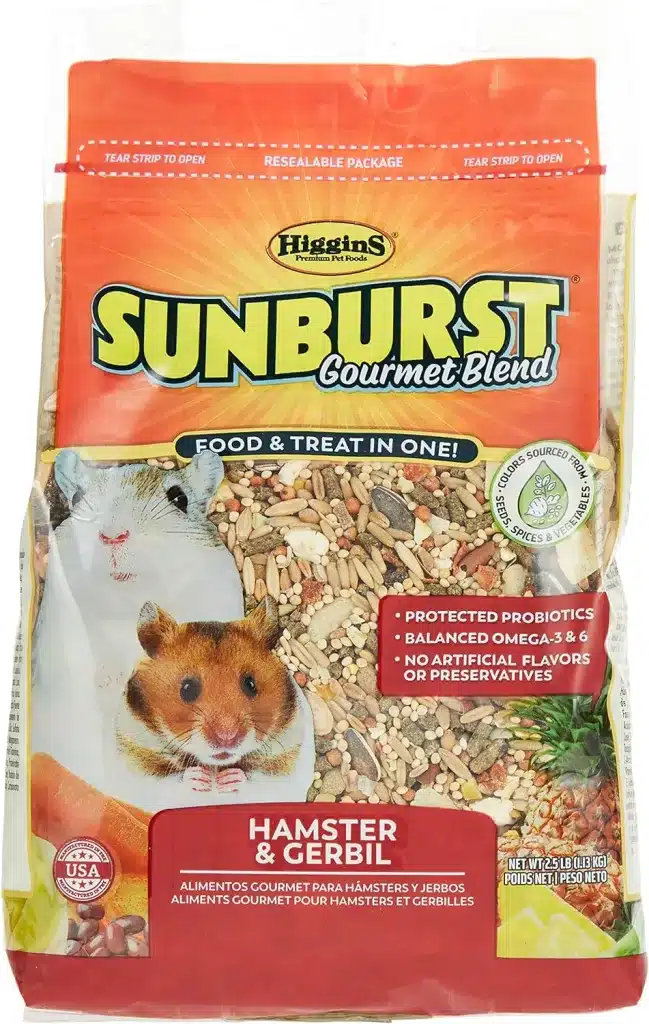
Protein: 14% | Fat: 7% | Fiber: 9.5%
Higgins Sunburst seed mix is the all-around favorite of gerbil owners and hamster owners. Although it contains alfalfa and Timothy hay pellets, the rest of the mix is formulated well for a balanced diet.
The alfalfa and Timothy hay pellets in this food are not harmful to gerbils, and they are another great way to provide chewing enrichment and healthy tooth maintenance.
2. Robin’s Pellet-Free Gerbil Mix
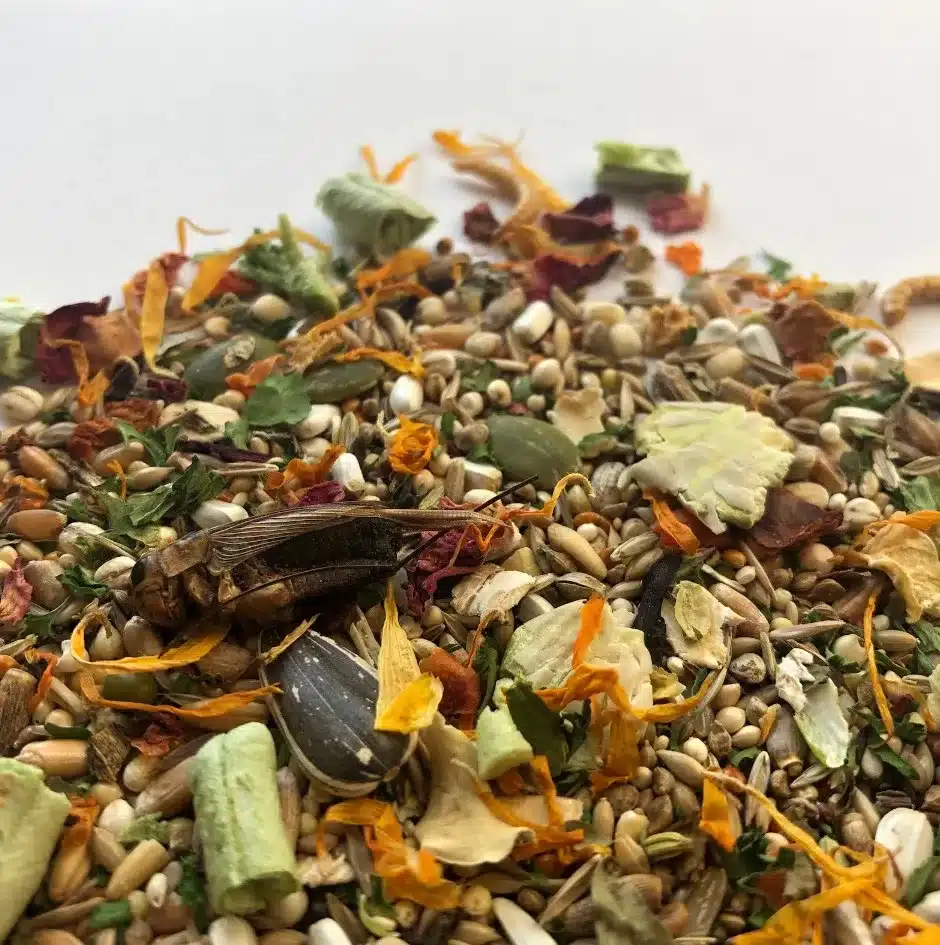
Protein: 16.44% | Fat: 9.91% | Fiber: 11.59%
If you want to avoid pellets in your gerbil’s seed mix altogether, we recommend formulating your own mix or purchasing one from Etsy.
Robin’s Pellet-Free Gerbil Mix is a wonderful option that offers the full range of nutrients gerbils need, without relying on poorly digestible pellets. This means that your gerbils, if they eat everything included in the seed mix, will get a very balanced diet from their seed mix.
This mix is also incredibly unique because it includes dried mealworms, as well as freeze-dried crickets!
Robin’s Pellet-Free Gerbil Mix is high in fat, however. We usually recommend a fat analysis of less than 9%, and this is just slightly over that limit.
You can balance this out by providing a larger amount of low-fat lab blocks and fresh fruits and veggies, and a smaller amount of seed mix.
Robin’s also makes a “Young Gerbil” variety of this mix that contains more fat and protein for growing gerbils.
Foods We Don’t Recommend for Gerbils
There are many food sources and commercial foods that may be advertised as suitable for gerbils, but they’re not recommended by gerbil advocates and experts.
Here are the foods that we do not recommend feeding to your gerbils.
Hay as a primary food source
Timothy hay is an excellent resource to keep on hand for gerbils. It provides a nesting material that helps hold up elaborate tunnels and burrows, and it’s a tasty treat for your gerbils to nibble on. Hay helps keep your gerbils’ teeth and claws trim, too.
However, Timothy hay and other types of hay aren’t a good primary food source for gerbils. Unlike guinea pigs and some other small rodents, hay does not make up a large part of a gerbil’s diet.
Gerbils can’t properly digest the nutrients contained in hay because of its high fiber content, so it’s better as a snack than a regular meal.
Hay-based pellets
Similarly, we don’t recommend feeding your gerbils pellets (or seed mixes containing pellets) that are made entirely or almost entirely of Timothy hay.
Many “gerbil pellets” have the proper percentages of vital nutrients, but they’re made of hay. This is a problem because the high fiber content in hay makes this food travel through the gerbil’s digestive system too quickly, without the time to digest those nutrients properly.
So even if a pellet lists a protein content of 16%, if it’s primarily made of hay, your gerbils won’t be getting that nutritional value.
Artificially colored foods
Gerbils don’t care about the color of their food, and neither should we. There’s no reason to provide food mixes or pellets that contain artificial colors and dyes.
Artificial colors (specifically Red 3) have been linked to cancerous tumors in rats, and it follows that they could do the same in gerbils. Other artificial colors can cause allergy-like reactions in animals, as well.
So even if a colorful food catches your eye at the store or online, check the back of the package carefully to make sure those colors are from natural sources, not artificial coloring.
Guinea pig or rabbit food
If you’ve owned rabbits or guinea pigs before and now own gerbils, you may think it’s perfectly fine to transfer that old food over to your new pets.
However, guinea pig and rabbit foods are not suitable for gerbils because they have very different digestive systems from those other animals.
As mentioned above, gerbils can’t digest the nutrients found in high-fiber foods like hay, and rabbit and guinea pig foods are largely comprised of fibrous food sources.
Pellet- or lab block-only diets
Although lab blocks are a healthy source of a broad range of nutrients, and they can make an excellent part of a gerbil’s diet, they shouldn’t make up the entire diet.
Gerbils also need a natural, unprocessed source of nutrition, such as a seed mix and fresh vegetables. Seed mixes (the right ones) are not only nutritionally healthy for gerbils, but they also stimulate your gerbils’ natural instincts to forage and harvest foods like seeds.
Hard seeds help trim a gerbil’s teeth, and prying seeds out of shells helps trim their nails.
Bird seed or fatty seed mixes
Bird seed looks similar to a gerbil seed mix in many ways, but it’s formulated differently. Not only does bird seed contain lots of filler like corn, but it also typically contains too many fatty seeds like sunflower seeds.
Although a good gerbil seed mix will contain a few fatty seeds, it shouldn’t make up a large part. Too many seeds that are high in fat can lead to obesity and eventually diabetes, so it’s important to pay attention to how many your gerbils are consuming.
How Much to Feed Gerbils
Adult gerbils usually need about 1 tablespoon of food each day. This could be three to four large pellets, a full tablespoon of seed mix, or a mix of the two.
You should also give your gerbils a small portion of fresh vegetables or fruit a couple of times a week. This can be in addition to their regular food or part of what makes up their daily tablespoon.
We recommend scatter-feeding your gerbils, rather than providing food in a dish, except when it comes to fresh foods. These should be given in a small dish or on a flat surface and removed after 24 hours.


0 Comments