
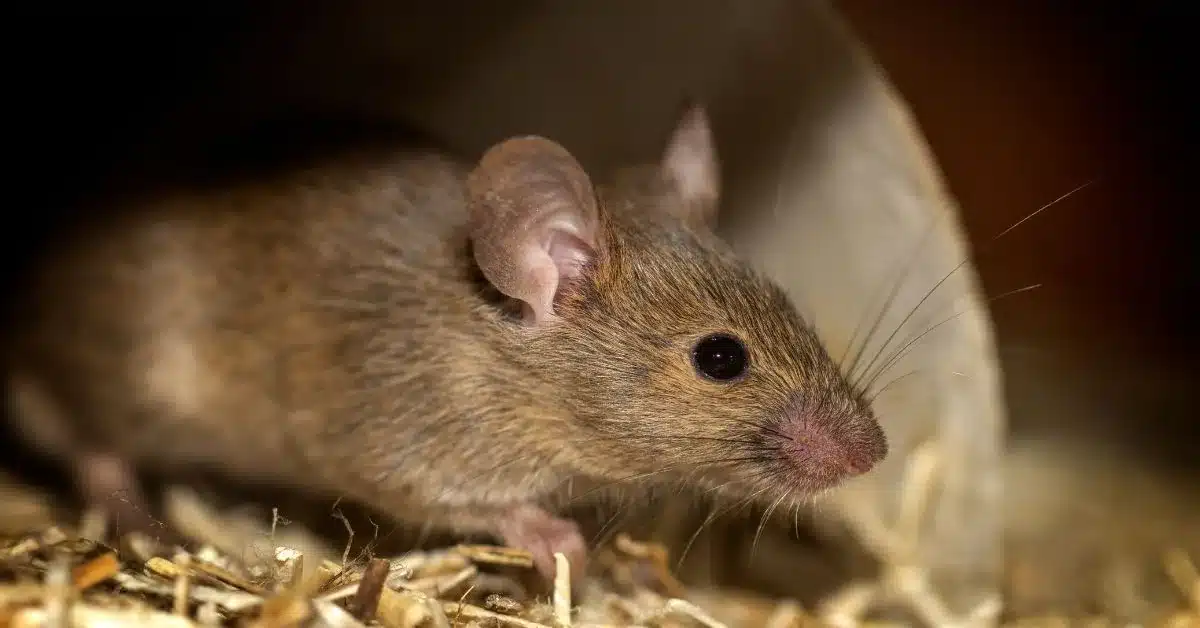
If you’re considering which small pet is right for you, your mind might instantly go to the humble mouse. Mice are one of the most common small pets, and they’re readily available in most pet shops. But do mice make good pets?
Mice can make wonderful pets for both beginner small pet owners and experts alike. However, there are some important things about mice that you should consider if you’re wondering if a mouse (or mice) is really right for you.
- Are Mice Good Pets for Kids?
- 10 Things to Know About Owning a Pet Mouse
- 1. Mice usually need companions
- 2. Mice have short lifespans
- Mice are more active (and noisier) than other rodents
- 4. Mice are most active in the evening and at night
- 5. Most pet mice are fancy mice
- 6. There are 8 fancy mouse varieties
- 7. Mice are prone to cancer
- 8. Mice can be nervous pets but often become more comfortable with time
- 9. Mice can enter a state called torpor to conserve energy
- 10. Mice have unique needs
Are Mice Good Pets for Kids?
Mice don’t make a good first pet for young children.
Many parents buy their children small pets before letting them take the plunge into cat or dog ownership.
Small pets can be easier to care for, and they have much shorter lifespans. This can help children learn about the cycle of life and death, and make for a much shorter time investment. But are mice a good family pet?
The answer is typically no: mice are not the best small pet for kids.
Mice are tiny and fast-moving, and they can bite when they’re stressed out. That means that a child is likely to drop a pet mouse, and it could subsequently get stuck under a piece of furniture or escape.
Because both the mouse and the child could incur an injury in this situation, mice are a pet best left to adults.
Unfortunately, many small pet websites and blogs still describe mice as good pets for children. This can lead to a lot of stress and disappointment when someone gets bitten or can’t interact with their pets in the way they would like to.
Luckily, there are other furry pets that make better and safer (for the child and the pet) companions for kids. For children who want a small and furry pet, consider guinea pigs, ferrets, or pet rats.
Learn more:
10 Things to Know About Owning a Pet Mouse
Pet mice can be amazing and entertaining pets for both beginners and experts, as long as you tend to their unique needs.
If you’re considering getting a pet mouse or pet mice, it’s important to know what to expect. Although mice are tiny and relatively low-maintenance, they’re not no-maintenance, and they have needs that are different from other small animals.
Here are 9 important things to keep in mind when you’re deciding if a mouse is a good pet for you, sourced from real mouse owners and experts.
1. Mice usually need companions
Consensus: It’s best to choose a pair or small group of female mice. If you want a male mouse, your options are more complicated.
You might rightly wonder if pet mice should be kept alone or in pairs or groups. Should you have a single mouse or more than one? The answer to that question isn’t always straightforward.
If you’re open to either sex, most mouse owners suggest opting for a pair or small group of females, rather than one or more males.
Female mice
When it comes to female mice, it’s decidedly best to keep them in pairs or small groups.
Female mice live together in colonies in the wild, and they can become depressed when kept alone in captivity.
Male mice
Opinions differ when it comes to whether you should keep a male mouse alone or with a companion.
Get the Free Mouse Owner's Toolkit
Printable care tools made for mouse owners. Chore chart, intros checklist, weight tracker, and more delivered to your inbox.
Males don’t live together in the wild, and they’re prone to fighting when kept together in captivity. However, they also benefit from social interaction with other mice, and they can experience loneliness when left alone.
If you choose to keep multiple males together, make sure they’re from the same litter and have been together since birth.
Another option is to keep a male mouse together with one or more female mice. However, you need to make sure the male is neutered if you choose this option.
Breeding is best left to the experts, and you don’t want to end up with more mice than you can handle.
2. Mice have short lifespans
Mice may have short lifespans (1-3 years), but those months and years can be highly rewarding.
An animal’s lifespan often relates to its size. For example, most pet rodents live just a few years, while elephants can live 70 years.
Of course, there are exceptions to this rule. Tortoises can live up to 150 years, and horses live much shorter lives than their human owners.
But because mice are the smallest rodent you can own as a pet, it’s not surprising that they have quite short lifespans. In the wild, mice only tend to live about six months or less. Their most common cause of death is predation.
As pets, mice can live between one and three years, with most living less than two years.
Fact: Fritzy, the oldest-living pet mouse ever recorded, lived to the ripe old age of 7 years and 7 months.
Mice are more active (and noisier) than other rodents
Mice are very active pets that can interact and entertain for hours.
If you’ve ever owned a different type of pet rodent, you might think you know what to expect with pet mice. However, mice can be much more active–and much noisier–than other pet rodents.
If they have plenty of fun activities in their cage, like a large non-mesh wheel and some toilet paper rolls to chew on, they can entertain themselves and their owners for hours on end.
4. Mice are most active in the evening and at night
You won’t want to keep your pet mice anywhere near your bedroom.
Unlike gerbils and some other small pets, mice are fully nocturnal (with some exceptions for mice who have grown acclimated to their owners’ schedules. That means that they’re the most active at night, and especially in the evening.
If you choose to keep mice as pets, you should make sure they have a quiet space to sleep during the day and the freedom to be loud at night.
5. Most pet mice are fancy mice
While fancy mice are more common as pets, harvest mice can also make great pets.
The traditional “pet mouse” is a domesticated version of a common house mouse, known as a fancy mouse.
Fancy mice are the only mouse species commonly known as pet mice, and there are no sub-breeds of fancy mice. Instead, there are eight different varieties, which we’ll cover below.
Although fancy mice are the most common pet mouse, harvest mice can also make great pets with the proper care.
6. There are 8 fancy mouse varieties
The difference between pet mouse varieties is aesthetic
There are seven “varieties” of mice kept as pets, but the difference between them is aesthetic.
Pet mice are not categorized into different breeds. While hamsters and guinea pigs have different breeds to choose from, all “pet mice” (fancy mice) are the same breed, which is called the fancy mouse.
The eight fancy mouse varieties are:
- Standard. The standard fancy mouse has a short, shiny coat, and is also known as a short-haired mouse.
- Long-hair. A long-hair mouse has longer hair that has a similar texture to that of the standard mouse.
- Satin. The satin fancy mouse also has short fur, but its fur is dense and noticeably softer to the touch.
- Long-hair satin. The long-hair satin mouse has a shimmery, silky coat that’s longer than a regular satin mouse.
- Frizzie. The frizzie fancy mouse has a short coat made up of tight curls. A frizzie mouse’s coat is longer than that of a standard or satin mouse and rougher to the touch. The frizzie also has curly whiskers.
- Frizzie satin: Frizzie satin fancy mouse has a tight curly coat with a shiny satin sheen. The frizzie satin has curly whiskers, too.
- Frizzled: A newly recognized variety, the frizzled fancy mouse has even more tightly curled, thick fur that feels similar to the soft side of velcro.
- Hairless: Hairless mice have smooth, hairless skin that’s pink and translucent.
You can learn more about the different mice varieties, as well as the different color variations, on AFRMA.
7. Mice are prone to cancer
Mice often develop cancerous tumors, which can be devastating to their owners.
Unfortunately, one of the things you need to know about pet mice is that they quite often develop cancer.
In nature, mice only live about six months, and they typically fall prey to predators as their cause of death. But as pets, since they live much longer lives, they’re prone to developing cancer as they age.
Because mice are so small, it’s difficult for a veterinarian to intervene to save a pet mouse. A mouse owner may feel devastated and helpless when their pet develops cancer, but it’s important to know this is common within the species.
8. Mice can be nervous pets but often become more comfortable with time
Although pet mice are considered domesticated, they can still have wild tendencies.
Even though fancy mice have been bred and raised as pets, they’re still prey animals which means they can be nervous and skittish.
It will take some time for your pet mouse to get used to you being around and to bond. Additionally, you might find that your pet mouse does not enjoy the company of curious dogs and cats.
It’s a good idea to start slow when you’re bonding with your mouse by holding out a treat and letting them come to you. Don’t try to grab your pet mouse before it feels comfortable taking food from your hand.
9. Mice can enter a state called torpor to conserve energy
Torpor in mice can be anxiety-inducing for their owners, but they typically recover with minimal intervention.
One of the stranger things you should know about pet mice is that they can enter a state of near hibernation known as “torpor.”
During torpor, a mouse can be extremely lethargic and may feel cold to the touch. This is a natural state that mice use in the wild to conserve energy during the scarce winter months.
Mice can enter torpor due to drops in temperature or prolonged exposure to temperatures that are too low.
According to Merck Veterinary Manual, mice should be housed at between 64°F to 79°F (18°C to 26°C), with a humidity level of 30% to 70%. Temperatures above 86°F can cause heat stroke in mice.
If you don’t know about torpor, you may understandably think that your mouse is dying. However, you can revive your pet mouse using soft foods and fluids. (Mouse owners recommend baby food and Pedialyte, which you can feed your mouse with a syringe.) This is important because they won’t eat or drink during torpor, which can be deadly.
If your mouse is lethargic for more than a few hours and you’ve attempted to syringe-feed them and warm them to the proper temperature, you should take them to the vet.
Learn more: Torpor in Mice and Hamsters
10. Mice have unique needs
Pet mice may be small, but they’re not low-thought pets. Their health and behavior depend heavily on the right setup, diet, and enrichment, and a few common mistakes can make a big difference over time.
If you’re considering mice (or already have them), these guides break down the essentials in more detail:
- What’s the Best Cage or Enclosure for Mice?
A practical guide to mouse-safe housing and enclosure types, plus what to avoid. - What Do Pet Mice Eat?
A clear breakdown of balanced mouse diets, safe foods, treats, and common feeding mistakes. - What Are the Best Wheels for Pet Mice?
How to choose the right wheel size and style to prevent injuries and support natural movement. - What is the Best Bedding for Mice?
An overview of safe bedding options, materials to avoid, and how bedding affects odor and respiratory health.
Understanding these basics upfront makes it much easier to decide whether mice are the right fit, and to give them a setup that actually works.
Mice Can Make Amazing Pets for the Right Owner
Mice might sound like a handful after reading all of the tips above, and they certainly can be.
However, mice are also endlessly entertaining and can make for loving companions with the right person. Treat your mouse with love and care, and you’re bound to make a furry little friend.



0 Comments