
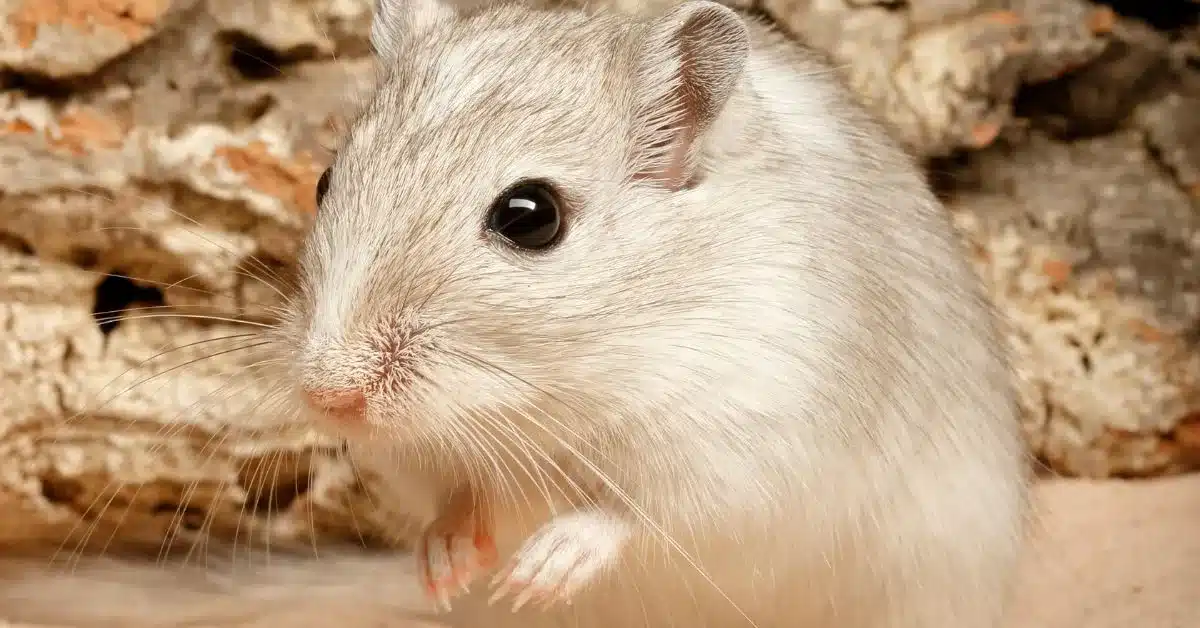
Before welcoming gerbils into your home, it’s a good idea to understand the typical lifespan of these fascinating creatures. In this article, we’ll delve into the factors that influence gerbil longevity and explore the differences in their lifespan as beloved pets and in the wild.
We will mainly be looking at the average lifespan of a Mongolian gerbil, which is the species most commonly kept as pets. However, we’ll look at the average lifespan for fat-tailed gerbils and great gerbils, too.
Most importantly, it’s essential to keep in mind that just because an animal has a shorter lifespan, that doesn’t mean that they deserve any less love and care than any other animal. Gerbils (and other small rodents) aren’t here for a long time, they’re here for a good time!
Average Gerbil Lifespan

The average gerbil lifespan is 2 to 4 years. However, pet gerbils who are well taken care of can live longer than that. Many pet gerbils have been known to live up to 5 years or longer.
As pets
As pets, Mongolian gerbils typically leave between 2 and 5 years. Factors that affect how long a gerbil lives as a pet include genetics, diet, quality of life, and unpreventable illnesses.
In the wild
Wild Mongolian gerbils typically live between 2 and 3 years if they live into old age and die of natural causes. Many gerbils in the wild don’t live into old age due to predation and harsh environmental factors.
The Gerbil Life Cycle
Now that you know how long a gerbil’s average lifespan is, you might be wondering what the different stages of a gerbil’s life cycle look like. Here’s a brief overview of the gerbil life cycle.
Pup
At birth, gerbil pups are completely defenseless and only half an inch long. Their eyes and ears don’t open until they’re at least two weeks old. Gerbil pups are dependent on their mother for nutrition because they don’t have teeth yet and can’t eat solid food.
Juvenile
After about four weeks, gerbil pups begin to gain awareness of their surroundings and the ability to move around on their own. This is when the weaning process usually begins, with the baby gerbils transitioning from their mother’s milk to solid foods. This process is gradual and usually happens over the course of about a week.
Pet gerbils are usually sold at about eight weeks of age, when they’ve been eating solid food for about a month. At this point, gerbils still have quite a bit of growing to do, and they’re still developing their instinctual skills like foraging and burrowing.
Tip: We never suggest purchasing a juvenile gerbil from a pet store or a disreputable “backyard” breeder. It’s always preferable to adopt a gerbil from a small animal rescue or find one who needs to be rehomed.
Adult
After about six months to a year, a gerbil is typically fully grown. Adult gerbils can continue to grow throughout their lives, however, and they can experience growth spurts unexpectedly.
Adult gerbils are confident in foraging and burrowing on their own, and they’ve usually developed strong bonds with their litter mates or tank mates. Bonds that develop early in life are more likely to maintain intact as the gerbils go through adulthood and into their elderly years.
Elder
After two to three years, gerbils may begin to decline in agility and activity levels. However, many if not most pet gerbils remain active and healthy up until the very last moments of their lives.
Typically, you won’t notice much of a change in your gerbil’s behavior after they become “elderly.” They’ll usually still run, play, mate (or try to), and eat as normal. However, elderly gerbils are more susceptible to health conditions because their immune systems gradually become weaker.
An elderly gerbil with health conditions may need an altered tank layout with fewer obstacles and some above-ground hides.
When a gerbil is approaching death from old age, they’ll usually start eating less and lose muscle mass quickly. You might notice that they’re lethargic and not as interested in burrowing or playing as they were before. This decline is typically fast and only lasts a week or two before death.
Other Gerbils Species’ Life Spans
Mongolian gerbils are the most common gerbil species kept as pets, but they aren’t the only species of gerbil. In fact, there are more than 110 gerbil species, and there may be more that haven’t been studied yet.
Here are the lifespans of two other common gerbil species: the fat-tailed gerbil, which is also sometimes kept as a pet, and the great gerbil, which is the largest gerbil species.
Fat-tailed gerbil lifespan
The lifespan of fat-tailed gerbils isn’t as well-understood as that of Mongolian gerbils. That’s because Mongolian gerbils are far more common both as pets and laboratory animals.
But from what we know, fat-tailed gerbils are slightly heartier than Mongolian gerbils. Their lifespan tends to be 3-8 years.
Get the Free Gerbil Owner's Toolkit
Printable care tools made for gerbil owners. Chore chart, weight tracker, and more delivered to your inbox.
Great gerbil lifespan
Even less is known about the lifespan of the great gerbil, as these large rodents aren’t kept as pets. However, it’s thought that the average great gerbil lifespan is 2-4 years.
Because these gerbils almost exclusively live in the wild, they will usually die due to predation or environmental factors rather than of old age.
Learn more: All About Gerbil Declanning & How to Prevent It
What Affects a Gerbil’s Lifespan?
Unfortunately, not all pet gerbils can reach their full lifespan potential. There are multiple factors that can influence how long a gerbil lives in captivity and potentially shorten its life. Here are the most significant factors that affect a gerbil’s lifespan.
Sex
According to a study by Experimental Gerontology, female gerbils tend to live longer than males. The mean age of the female gerbils in the study was 139 weeks, while for males, it was 110 weeks.
It’s not clear why female gerbils live longer than males, on average, but the same is true for many animal species (including humans).
Genetics
Another factor that influences how long your gerbil will live is its genetics. A gerbil from a long line of long-lived gerbils has a better chance of living a long life itself.
Some gerbils are genetically prone to certain conditions and diseases, such as seizures. Seizures can shorten the lifespan of a gerbil, and the condition is unfortunately quite common. Seizures usually begin when the gerbil is a juvenile.
Common illnesses
Illness can also cause a shorter lifespan in gerbils. Illnesses that are common in Mongolian gerbils include cancer and Tyzzer disease. Tyzzer disease is caused by a type of bacteria, and it’s the most common infectious disease in gerbils.
Tyzzer causes lethargy, lack of appetite, poor coat quality, and eventually death. Unfortunately, once a gerbil begins showing signs of Tyzzer, it’s usually too late to treat them.
Care
Stress and poor diet both have a big impact on how long a gerbil is able to live. A gerbil who isn’t getting the proper nutrition or is living in an enclosure that’s too small is likely to pass away at a younger age.
Gerbils need a proper-sized enclosure and a nutritious diet in order to live to their full lifespan potential and live happy lives. Gerbils also need opportunities for exercise, including a large wheel (we recommend the Niteangel wheel, making sure to take the center cap off) and free-roam time.
Unfortunately, even a gerbil with optimal care can’t live forever, and some gerbils just live shorter lives than others regardless of their quality of care.
What Was the Oldest Living Gerbil?
The oldest living Mongolian gerbil on record was a female named Sahara, and she lived to be 8 years and 4 months old (Guinness World Records). She died in 1981.
Unfortunately, there are no photos or records of Sahara, so whether or not this record is legitimate is somewhat up to debate.
It’s possible that the gerbil was simply younger than the owner thought when she was adopted. However, it’s also possible that there really was a gerbil named Sahara who lived for more than eight years.
Signs That Your Gerbil is Getting Old
As mentioned above, there will typically be very few or no signs that your gerbil is getting old until shortly before their death. Gerbils are prey animals, which means they’re very good at masking their weaknesses to avoid being targeted by predators.
When a gerbil is approaching death from old age, they might become less active, stop running on their wheel, and stop eating as much. Their droppings may become smaller, harder, and drier than before. You might also notice that their coat is a bit more disheveled from a lack of grooming.
How to Help Your Gerbil Live Longer
Some of what makes a gerbil live for a long time or for a short time isn’t under our control as gerbil owners. But there are some things you can do to help your gerbil live their longest, best life.
Give them a large enclosure
Gerbils in an enclosure that’s too small are likely to become stressed, which can ultimately lower their immune system and shorten their lives. It also reduces a gerbil’s quality of life while they’re alive.
Gerbils should have a minimum of 620 square inches of floor space on one level. Additional levels can be enriching for some gerbils, but they do not add to the total unbroken floor space.
Not sure if your setup meets that standard? Our best gerbil cages guide covers enclosures that give your gerbils the space they need.
We recommend a basic 40-gallon breeder tank for most gerbils since this gives plenty of room for burrowing and fitting in a large wheel.
Learn more: Is the Omlet Qute a Good Cage for Gerbils and Hamsters?
Feed them the proper diet
Gerbils are omnivores, which means they need a mix of vegetable food sources and animal protein. You can meet your gerbil’s dietary needs by feeding them a combination of lab blocks (pellets) and a varied seed mix.
Here are some of our favorite food choices for gerbils:
- Supreme Petfoods Science Selective Gerbil
- Oxbow Essentials Adult Rat
- Higgins Sunburst Gourmet Food Mix for Hamsters and Gerbils
- Robin’s Pellet-Free Gerbil Mix
Make sure they get exercise and enrichment
Gerbils need to expend energy every day to stay happy and healthy, both mentally and physically. This means providing them with a suitable wheel (at least 8 inches but preferably 11 inches), as well as plenty of items to chew on.
Enrichment for gerbils can be as simple as a toilet paper roll filled with Timothy hay or a cardboard cereal box.
Make sure that your gerbils always have something to nest with, something to chew up, and plenty of deep bedding to make their burrows and nest.
Keep them in at least pairs
Gerbils are highly social creatures, and they are known to live longer, happier lives when kept in pairs or small same-sex groups. Gerbils who are solitary can experience stress and as a result, die at a younger age.
If you have an older adult gerbil whose companion has died, try introducing them to a new gerbil. Most often, you will be able to bond the gerbils using the split-cage method of bonding.
Sometimes, however, a single older gerbil won’t be willing to bond with anyone new. In those cases, it’s preferable to keep them solitary over trying to force a relationship with a new gerbil.
Keep them in a stable environment
In addition to the actual enclosure you house your gerbils in, the room where they live is important. It should stay at a stable temperature (between 65 to 75 degrees Fahrenheit) and be free from excessive dust, drafts, or direct sunlight.
You should also try to keep your gerbils in an area that’s generally calm, but somewhere that they can see and interact with their human family members.
You may also need to try and keep your gerbils out of the way of predator pets like cats and dogs. Some gerbils are more comfortable with the presence of large pets than others. If it’s causing your gerbils stress, you should try to keep them separate from your other pets.
Do health checks
It’s important to check your gerbils over for any signs of ill health at least once a week. Diseases and illnesses develop suddenly and extremely quickly in small rodents, so the more often you can check on your gerbils’ health the better.
Perform a health check by weighing your pets (at least monthly) and running your hands over their body. Be on the lookout for lumps and bumps, scabs, missing fur, or anything else unusual. Check the gerbils’ tails, rears, and the scent glands on their stomachs, as well as their eyes, teeth, and ears for anything unusual.
Take them to the vet
It’s a common belief that small pets like gerbils, hamsters, and mice don’t require veterinary care. On the contrary, taking your gerbils to a vet when you suspect they might be experiencing a health issue is essential.
Find an exotic pet veterinarian in your area before your pet becomes sick, rather than after. It’s also a good idea to find out if there’s an exotic pet vet in your region even before adopting gerbils. Make sure to call and ask if they’re experienced in treating gerbils.
Learn more: What Can Gerbils Eat as Treats? Healthy Treats for Gerbils
How Long Do Gerbils Live? Summary
In conclusion, understanding the lifespan of gerbils is crucial for anyone considering them as pets. The average lifespan of a Mongolian gerbil, the most common species kept as pets, is 2-4 years. However, with proper care, gerbils can live longer, with some reaching 5 years or even more. In the wild, gerbils typically live between 2 and 3 years due to predation and harsh environmental factors.
To help gerbils live longer, owners should provide them with a large enclosure, a proper diet consisting of a mix of vegetable food sources and animal protein, opportunities for exercise and enrichment, companionship by keeping them in pairs or small groups, a stable environment, regular health checks, and prompt veterinary care when needed.
While gerbils may not live as long as some other pets, they deserve love, care, and a good quality of life during their time with us. By providing them with optimal care, we can ensure that they live their fullest and happiest lives possible.
Sources:
- “Epilepsy in Gerbils.” Arizona Exotic Animal Hospital. https://azeah.com/gerbils/epilepsy-gerbils
- Cartwright, Louise. “Life Cycle Of A Gerbil [An In-Depth Guide].” Gerbil Welfare. 2 November 2022. https://www.gerbilwelfare.com/gerbil-life-cycle/
- Loskota. “The Gerbil as a Model for the Study of the Epilepsies.” Medical Devices & Sensors. 1974. https://onlinelibrary.wiley.com/doi/abs/10.1111/j.1528-1157.1974.tb04000.x?sid=nlm%3Apubmed
- Baker, Julian. “Tyzzer’s Disease in Gerbils.” National Gerbil Society. http://gerbils.co.uk/gerbil-help/gerbil-ailments/tyzzers-disease-gerbils/
- National Research Council (US) Subcommittee on Laboratory Animal Nutrition. “Nutrient Requirements of Laboratory Animals: Fourth Revised Edition, 1995.” Washington (DC): National Academies Press (US). 1995. 6, Nutrient Requirements of the Gerbil. https://www.ncbi.nlm.nih.gov/books/NBK231920/
- “Guinness World Records.” 2014. Jim Pattison Group. ISBN 9781908843159. https://www.guinnessworldrecords.com/world-records/70893-longest-lived-caged-gerbil


0 Comments